
We work with Ukrainian communities across the UK to create accessible, non-clinical spaces for connection, reflection, and shared understanding after displacement.
Community seminars and creative sessions
for Ukrainian refugees in the UK
Why This Work Matters
Since 2022, the UK has welcomed a large number of people displaced by the war in Ukraine. Many are now rebuilding their lives while living with ongoing uncertainty – about family members, legal status, work, housing, and the future.
For many Ukrainians, the challenge is not only access to formal services, but the absence of safe, culturally familiar spaces where people can meet, reflect, and make sense of their experiences together.
Research and local experience consistently show that people displaced by war face layered challenges after arrival:
In our conversations with Ukrainian communities in the UK, we hear a clear need for low-threshold, non-clinical spaces that support connection without pressure or labels.
social isolation and loss of familiar support networks
difficulty navigating new systems and services
emotional strain linked to displacement and uncertainty
reluctance to seek formal mental health support
What We Do
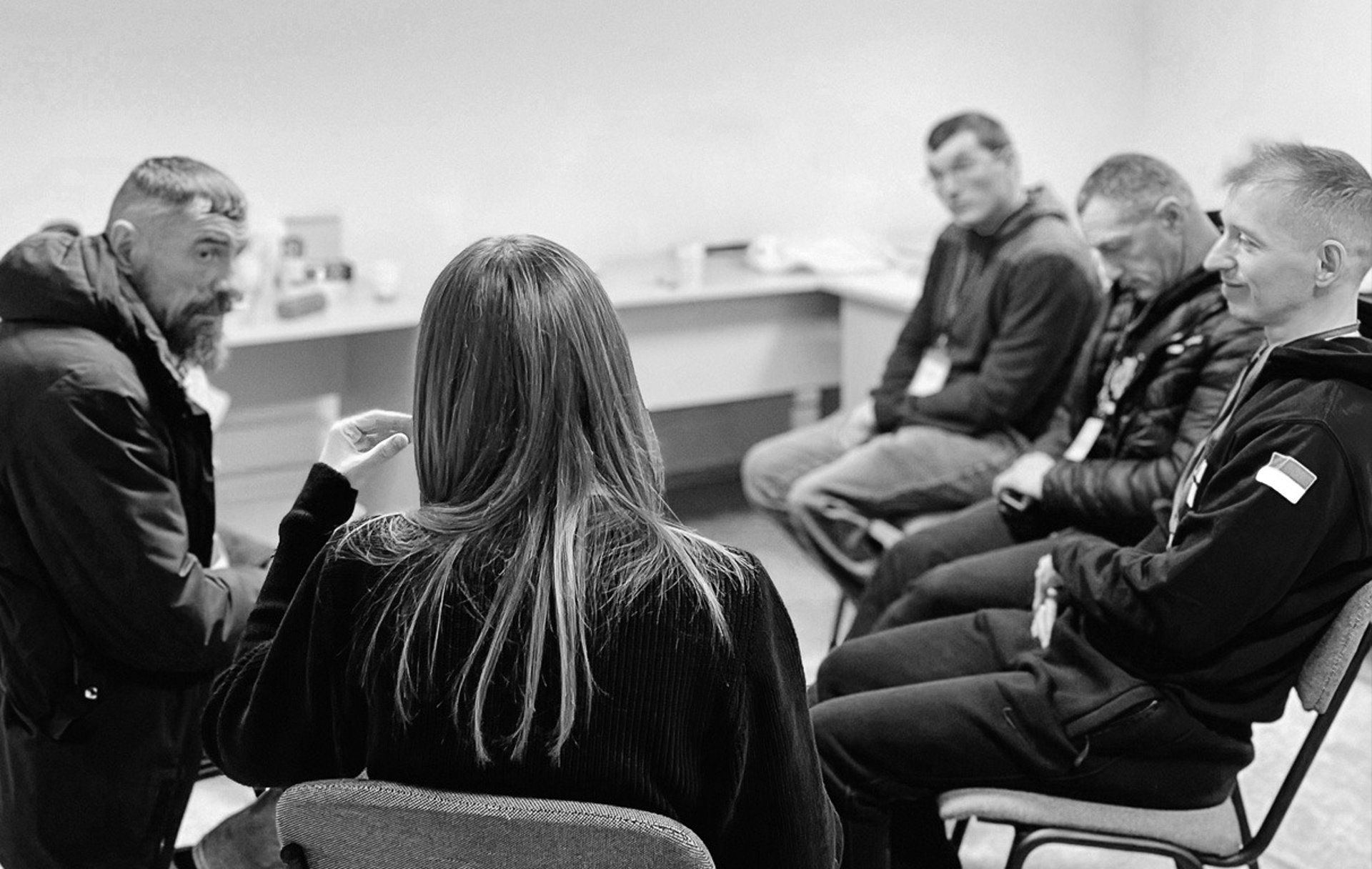
We run regular RE/FRAME seminars in the UK in collaboration with local Ukrainian groups.
These small, facilitated sessions:
Create space for shared reflection and conversation
Explore themes relevant to life after displacement
Support peer connection and mutual understanding
Participation is voluntary and non-clinical. People choose how much they wish to share.
Community Seminars
Community photography and creative sessions
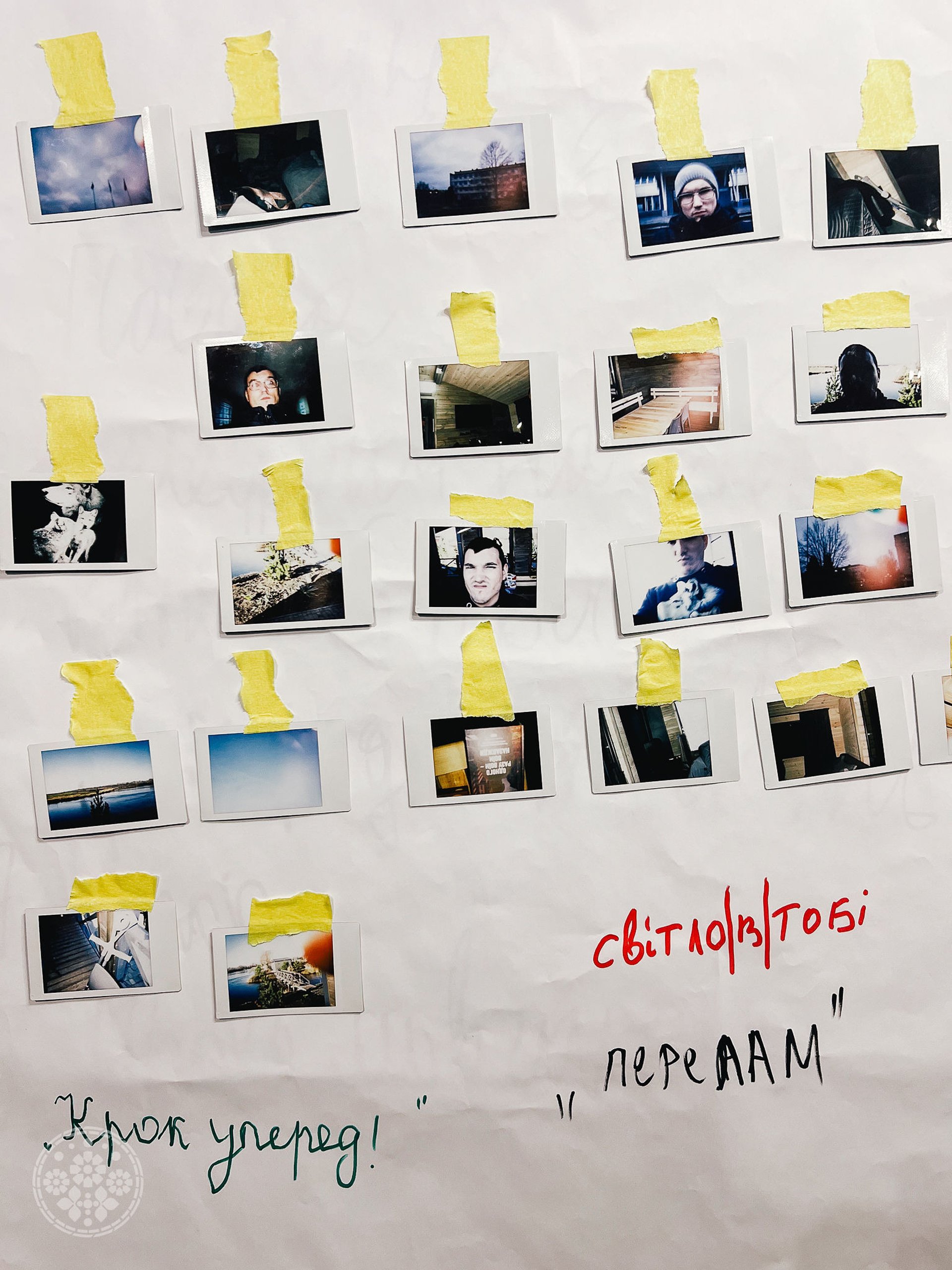
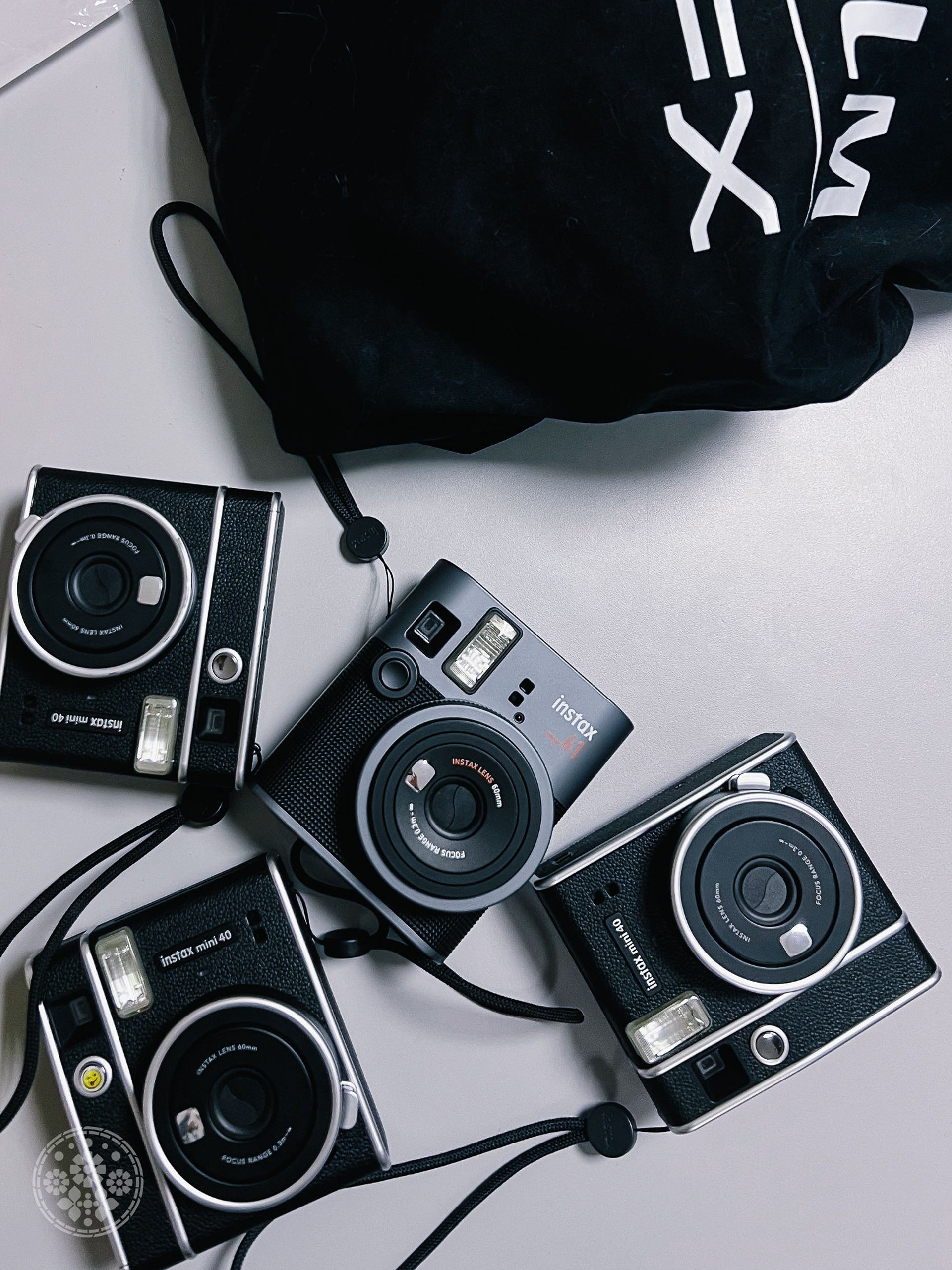
Alongside seminars, we run photography-based creative sessions that support reflection and expression.
Sessions may include:
Guided photography walks
Thematic photo assignments
Group discussion around images and meaning
No photography experience is required. Photography is used as a reflective tool, not an artistic test.
Who This Is For
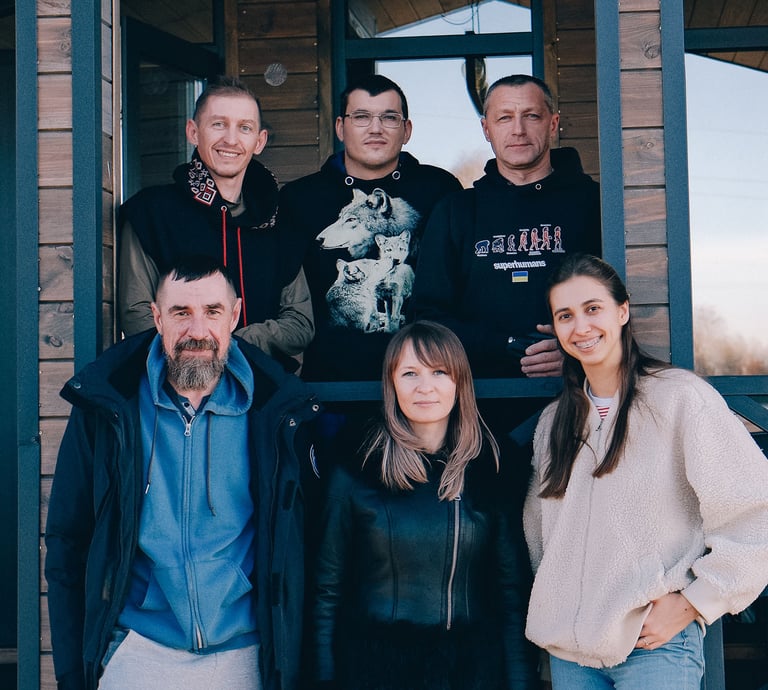
Our UK activities are open to all Ukrainians living in the UK — veterans, family members, and anyone affected by war and displacement. No prior experience, referral, or formal diagnosis is required.
Our Community-First Approach
We prioritise accessibility over diagnosis, participation over treatment, and listening before designing solutions.
Not everyone is ready or willing to engage with therapy. Many people first need connection, reflection, and a sense of belonging.
RE/FRAME activities are designed to meet people at that point—on their terms, in their time.
The community
shapes the work.
Through participation and feedback, community members actively influence:
Seminar themes and discussion topics
Activity formats and pacing
Future locations and focus areas
This ongoing dialogue ensures that our activities remain relevant, responsive, and grounded in lived experience rather than prescription.
What Participants Say
”I didn't realise how much I needed to talk with people who understand. Not therapy — just being with others who know what it's like.”
- Participant, Ukraine seminar, 2025
”The photography walk gave me a way to see my new city differently. It wasn't about taking perfect photos —it was about noticing things again.”
- Participant, Manchester creative session, 2025
Frequently Asked Questions
Where do activities take place?
We offer sessions in Norwich, London, Manchester, Birmingham - in partnership with local Ukrainian community organisations. We're actively exploring opportunities to expand to other regions based on community need.
How long is each session?
Seminars typically run for 2-3 hours, while creative sessions may be half-day or full-day depending on the format. All sessions include breaks and are designed to be accessible and manageable.
How often do sessions happen?
Frequency varies by location. Most seminar series run monthly or bi-monthly, while creative sessions may be offered as intensive weekend workshops or ongoing weekly groups.
Is there any cost?
No. All RE/FRAME UK activities are free to participants. We believe financial barriers should never prevent access to community support.
What about privacy and safety?
Participation is always voluntary. People choose what they share and when. Personal stories and creative work are never shared without explicit consent. Sessions are facilitated in a respectful, supportive environment designed to protect dignity, choice, and privacy.
Where can I learn more about you?
You can learn more about Viburnum Bridge on our website: https://viburnumbridge.org/
Get in touch
info@viburnumbridge.org
Калиновий Міст
© 2025 Viburnum Bridge Foundation (Неприбуткова Громадська Організація "Калиновий Міст" )
VBF is registered as a non-profit organisation — UK Registration No. 16251338. Ukraine EDRPOU code: 459679992025